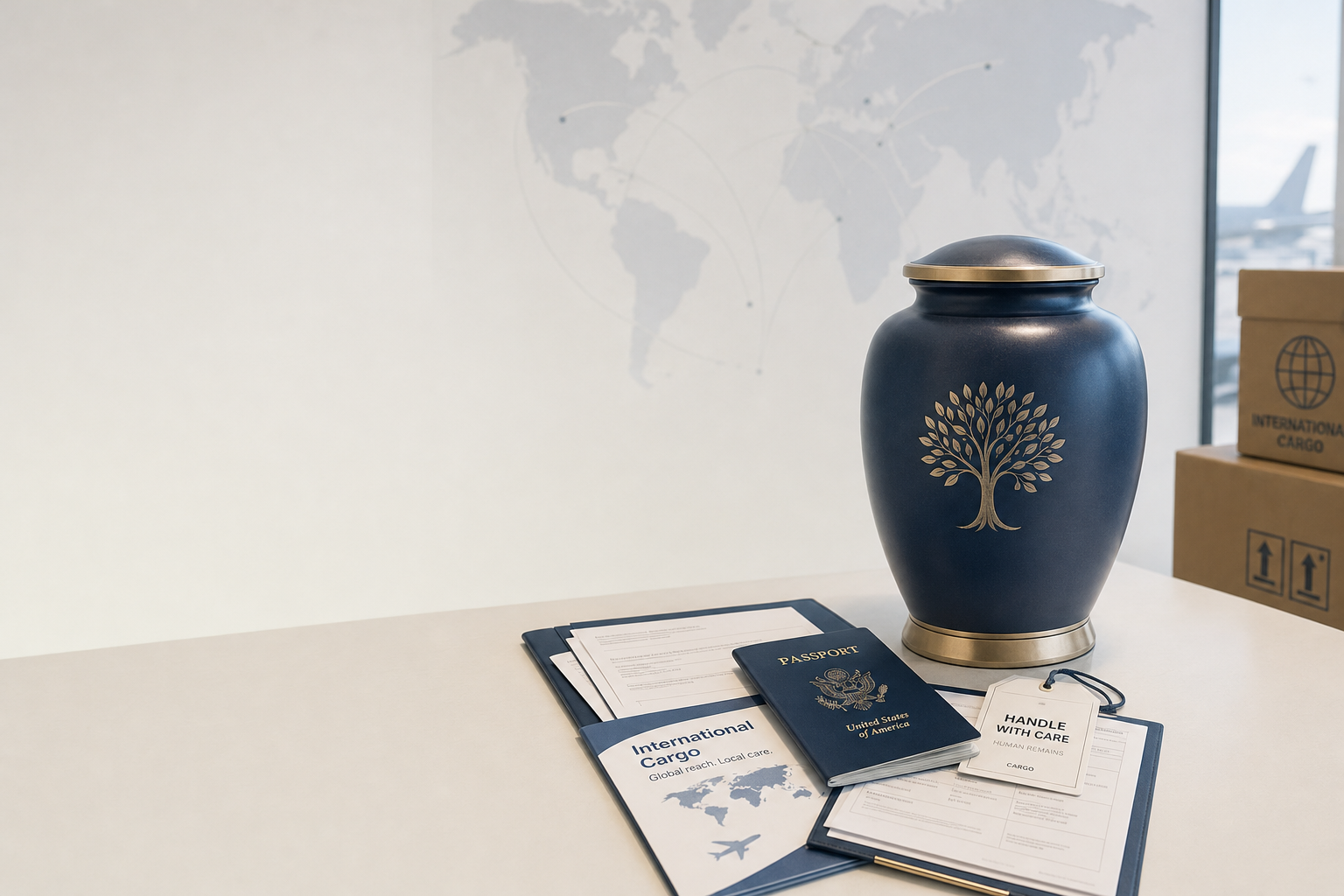
Losing someone is already difficult. When it happens in another country, the situation becomes more complex in ways most people are not prepared for. Questions come quickly, and answers are not always easy to find. In that moment, understanding what to do when someone dies abroad can help bring some order to a situation that feels uncertain.
Families often face unfamiliar procedures, language barriers, and time-sensitive decisions. Knowing how the process works, especially when planning a return to India, can help reduce confusion and avoid delays.
Step One: Getting Official Confirmation
The first step is obtaining a formal death certificate. This is issued by a hospital or local authority and is required for all the next steps.
Without this document, it is not possible to begin any legal or transport arrangements. It must be accurate, as even small mistakes can slow things down later. This is where many families begin to understand what to do when someone dies abroad, as documentation becomes the starting point.
Step Two: Reaching Out to the Indian Consulate
If the plan is to return the person to India, contacting the consulate is important. The consulate reviews documents and guides required approvals.
This step is especially important in repatriation to India, as the consulate issues a no-objection certificate. This document confirms that the remains can be transported into the country.
Clear communication with the consulate helps prevent unnecessary delays.
Step Three: Understanding the Documents Required
Several documents are involved in the process. These may include:
- Death certificate
- Embalming certificate
- Passport copy
- Consulate-issued approval
Knowing the documents required for repatriation to India in advance helps families stay organized. Missing paperwork is one of the most common causes of delays.
At this stage, families begin to see that what to do when someone dies abroad involves careful coordination rather than a single action.
Step Four: Preparing and Transporting the Remains
The remains must be prepared in accordance with international transport standards. This includes embalming and placement in an approved container.
Airlines follow strict rules, especially when transporting human remains to India. The container, documentation, and timing must all meet airline and destination requirements.
Flights are arranged through cargo services, and approvals must be secured before departure.
Step Five: Arrival and Clearance in India
Once the remains arrive in India, customs clearance is required before release. Authorities verify all documents and ensure compliance with local regulations.
This step is a key part of bringing a body back to India, and it must be handled carefully to avoid delays at the airport.
After clearance, the remains are handed over to the family or a local funeral provider.
Final Thoughts
Handling a loss across borders is never simple. There are legal steps, documentation, and coordination happening simultaneously. Understanding what to do when someone dies abroad can make the process clearer and more manageable.If you need guidance or support during this time, Lotus Passage can assist with every step of international repatriation, including returns to India, ensuring everything is handled properly from start to finish.