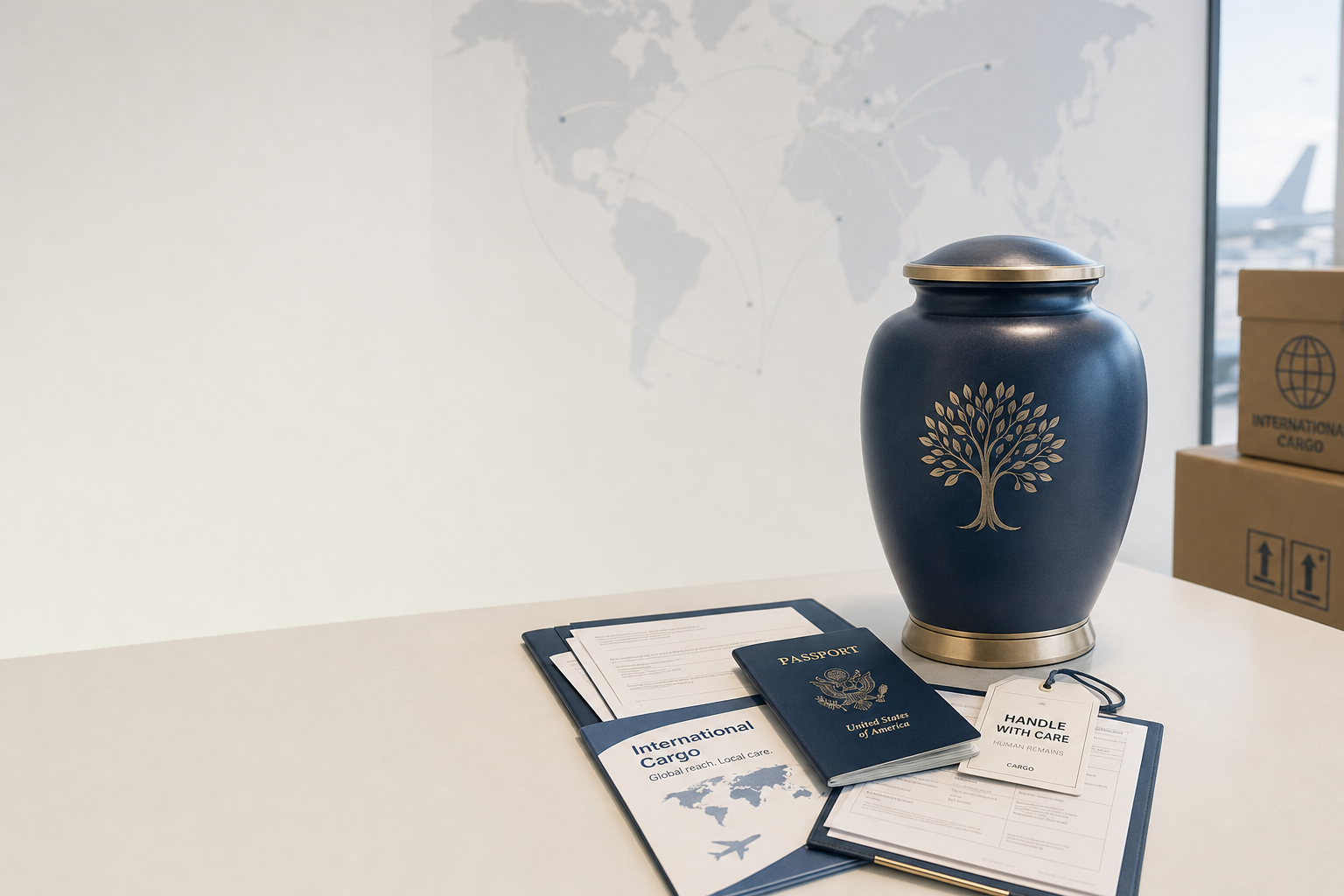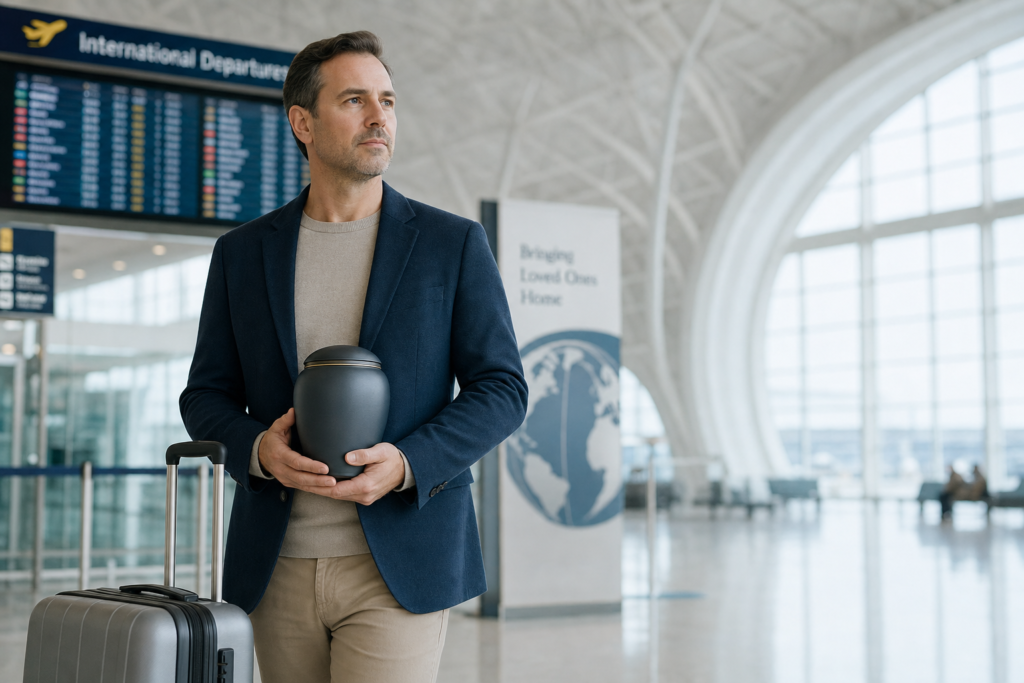
When a loved one has been cremated abroad or needs to be returned to another country, families may consider traveling with the cremated remains themselves. This can be a meaningful and practical option, but international travel with an urn requires careful planning. Airline rules, airport security procedures, customs requirements, and the laws of the departure, transit, and destination countries may all apply.
Understanding the process in advance can help prevent unnecessary stress at the airport. While cremated remains are commonly transported by air, there is no single worldwide procedure. Requirements may differ by airline and country, so families should confirm the details before booking travel.
Can You Take Cremated Remains on an International Flight?
In many cases, passengers may carry cremated remains in their cabin baggage or transport them as checked baggage or air cargo. However, the airline determines how the remains may travel. Some airlines do not permit cremated remains in checked baggage, while others may have specific packaging, notification, or documentation requirements. The International Air Transport Association advises passengers to verify the rules directly with the funeral home and the individual airline before traveling. ([iata.org](https://www.iata.org/en/publications/newsletters/iata-knowledge-hub/what-you-need-to-know-about-the-transportation-of-human-remains-by-air?utm_source=openai))
It is important to distinguish between accompanying an urn as a passenger and arranging a formal international shipment. A passenger traveling with an urn may need to manage airport screening and customs personally. A funeral home or specialist repatriation provider may instead arrange transportation through the airline’s cargo department, which can be more appropriate when the remains are traveling without a family member or when multiple countries are involved.
Choose the Right Urn or Temporary Container
The container is one of the most important practical considerations. Security screening equipment must be able to identify what is inside the container. TSA recommends a temporary or permanent crematory container made from a lightweight material such as wood or plastic. If the container produces an opaque image during X-ray screening, officers may not be able to clear it for travel. TSA also states that officers will not open a cremation container, even at a passenger’s request. ([tsa.gov](https://www.tsa.gov/travel/security-screening/whatcanibring/all-list?pubDate=20250608&utm_source=openai))
For air travel, families should consider:
- A temporary container made of wood, plastic, cardboard, or another security-friendly material.
- A container that is securely sealed but can still pass through X-ray screening.
- Protective packaging that prevents movement or damage during handling.
- A permanent urn for later transfer, if the decorative urn is not suitable for airport screening.
A metal, stone, or heavily ornamented urn may create screening difficulties. Before traveling, ask the crematory or funeral home whether the urn is suitable for airport security and whether a temporary container would be safer.
Documents Commonly Needed for International Travel
Documentation requirements vary depending on the countries involved. Families may be asked for the death certificate, cremation certificate, cremation permit, transit permit, or documents confirming the identity of the deceased. Some countries or airlines may also request translated, notarized, authenticated, or apostilled documents.
For international transportation, it is wise to carry both original documents and copies. Keep the documents together in a secure folder and make digital copies available to the person traveling and to the receiving funeral home. Depending on the route, additional embassy or consular paperwork may be required.
When remains enter the United States, U.S. Customs and Border Protection explains that documentation may include a death certificate and cremation permit, with additional export or embassy paperwork potentially required for an international shipment. Requirements can depend on the circumstances and the way the remains are transported. ([help.cbp.gov](https://www.help.cbp.gov/s/article/Article-1404?language=en_US&utm_source=openai))
Check the Departure, Transit, and Destination Rules
International travel may involve more than one legal jurisdiction. The rules of the country where the journey begins may differ from the rules of the final destination. A connecting airport may also impose its own requirements, even if the traveler does not leave the airport.
Before making arrangements, confirm:
- Whether the departure country permits cremated remains to leave with a passenger.
- Whether each transit country allows an urn to pass through its airport.
- Whether the destination country requires an import permit, declaration, or specific certificate.
- Whether documents must be translated into the destination country’s official language.
- Whether the final destination has local rules for burial, scattering, or interment.
The U.S. Department of State notes that burial and cremation arrangements must comply with both U.S. and foreign law, and that options can depend on local facilities, customs, and legal practices. Its guidance also emphasizes that families should work with the relevant embassy or consulate when a death occurs abroad. ([travel.state.gov](https://travel.state.gov/content/travel/en/international-travel/while-abroad/death-abroad1.htmlwhile-abroad.html?utm_source=openai))
How Airport Security Screening Works
At the airport, the urn may need to be presented separately from other carry-on items. Security staff may conduct additional screening if the container or its contents cannot be clearly identified. A security-friendly container gives the screening team the best opportunity to clear the remains without opening the urn.
Arrive earlier than usual and tell the security officer discreetly that you are carrying cremated remains. Allow extra time for questions, document review, or secondary screening. Families may also wish to carry a letter from the funeral home or crematory confirming the contents of the container, although this does not replace any document required by the airline or government authority.
Security screening approval does not automatically mean the urn satisfies customs or immigration requirements. Airport security, airline acceptance, and border entry are separate parts of the journey.
Should Cremated Remains Be Carried On or Checked?
Many families prefer to carry the urn in the cabin because it remains under their supervision. However, the airline’s policy controls whether this is permitted. Checked baggage may expose the urn to delays, mishandling, or baggage-routing problems, and some carriers prohibit cremated remains in checked luggage.
When the airline does not permit cabin transport, formal cargo arrangements may be a better option. IATA explains that cremated remains may be transported as cargo or carried by passengers, but the applicable requirements depend on the airline and the countries involved. ([iata.org](https://www.iata.org/contentassets/8aa8928c553042bf99a5014d8ac25c8f/guidance-document-transport-of-covid-19-human-remains.pdf?utm_source=openai))
A Practical Preparation Checklist
Families can reduce avoidable problems by preparing several days or weeks before departure:
- Contact the airline and request its current policy for traveling with cremated remains.
- Ask whether advance approval, special booking, or written notification is required.
- Confirm the container is suitable for X-ray screening.
- Check the requirements of every country on the itinerary.
- Obtain required certificates, permits, translations, and authentications.
- Keep the urn and documents together throughout the journey.
- Arrive early and allow time for additional screening.
- Confirm how the remains will be received and cared for after arrival.
Frequently Asked Questions
Can cremated remains go through airport security?
They may be allowed through security, but the container must be suitable for screening. TSA recommends a lightweight, X-ray-friendly container. Airline and destination-country rules may add further requirements. ([tsa.gov](https://www.tsa.gov/travel/security-screening/whatcanibring/all-list?pubDate=20250608&utm_source=openai))
Can cremated remains be placed in checked luggage?
That depends on the airline. Some carriers do not allow cremated remains in checked baggage, so passengers should obtain confirmation directly from the airline before departure.
Do I need a death certificate when traveling with ashes?
Often, a death certificate and cremation certificate are requested for international travel, but requirements differ. Carrying the documents is strongly recommended, even when an airline representative says they may not be needed.
Is an urn required for international air travel?
A secure container is required, but it does not always need to be the final decorative urn. A temporary, X-ray-friendly container may be more suitable for the journey.
What if the itinerary includes a connecting country?
Check the rules for every transit country, not only the final destination. A connection can create additional documentation or entry requirements, particularly when changing airlines or collecting baggage.
Conclusion
Flying internationally with cremated remains can be handled respectfully when families plan the journey carefully. The most important steps are confirming the airline’s current policy, selecting a security-friendly container, organizing the required documents, and checking the laws of every country along the route.
Because requirements can change and vary widely, families should verify the arrangements with the airline, the relevant embassy or consulate, local authorities, and a qualified funeral or repatriation professional. Thoughtful preparation helps protect the dignity of the deceased while giving loved ones greater confidence during an already difficult journey.