Introduction
When someone dies in another country, families often focus immediately on the funeral arrangements, legal documents, and return of the person’s remains. Personal belongings can receive less attention, even though they may include passports, phones, medication, jewelry, clothing, financial records, family photographs, or items with deep emotional value.
Recovering these belongings is not always as simple as collecting a suitcase from a hotel or hospital. Police, coroners, courts, hospitals, airlines, hotels, insurers, and embassies may all have different responsibilities. The correct process depends on where the death occurred, how it occurred, whether an investigation is underway, and who has legal authority to manage the deceased person’s estate.
This guide explains what families should know about personal belongings after a death abroad. It is general information, not legal advice. Requirements and procedures vary by country, and families should confirm details with the relevant local authorities, embassy or consulate, insurer, and estate professional.
Who May Have the Belongings After a Death Abroad?
Belongings found with a deceased person may initially be handled by local authorities. Depending on the circumstances, they could be collected by police, transferred to a hospital, held by a coroner or prosecutor, or secured by a hotel, tour operator, airline, or other organization.
In some cases, the belongings are released to the next of kin. In other situations, authorities may require an executor, administrator, lawyer, or another legally recognized representative to claim them. A family relationship alone may not be enough, particularly if there is a will, a disputed estate, unpaid debts, or an active investigation.
For U.S. citizens who die overseas, a consular officer may sometimes assist with the deceased person’s estate or personal effects when there is no legal representative in the country. The U.S. Department of State explains that this role can include taking possession of, inventorying, and helping arrange shipment of certain personal effects. Shipping costs remain the responsibility of the estate, legal representative, or next of kin. ([travel.state.gov](https://travel.state.gov/content/travel/en/international-travel/while-abroad/death-abroad1.htmlwhile-abroad.html?utm_source=openai))
When Can Authorities Keep Personal Items?
Personal belongings may be retained temporarily when they are relevant to an investigation. This is more likely when the death was unexpected, accidental, violent, unexplained, or otherwise subject to a coroner or prosecutorial review.
Items may be held as potential evidence, even if they appear ordinary. A mobile phone, clothing, medication, luggage, or electronic device could contain information investigators need. Families should avoid asking a hotel, hospital, funeral home, or local contact to dispose of or ship items before authorities confirm that release is permitted.
Official guidance for British nationals who die in the United States notes that belongings may be kept as evidence until a court case is complete. It also explains that embassies and consulates may not be able to take responsibility for the deceased person’s personal belongings. ([gov.uk](https://www.gov.uk/guidance/when-someone-dies-in-the-usa?utm_source=openai))
Before making travel plans or arranging international shipping, ask:
- Which authority currently holds the belongings?
- Are the items being retained for evidence?
- Has the investigation or post-mortem process been completed?
- Who is authorized to collect or receive the belongings?
- Are any items restricted from export or import?
Documents That May Be Requested
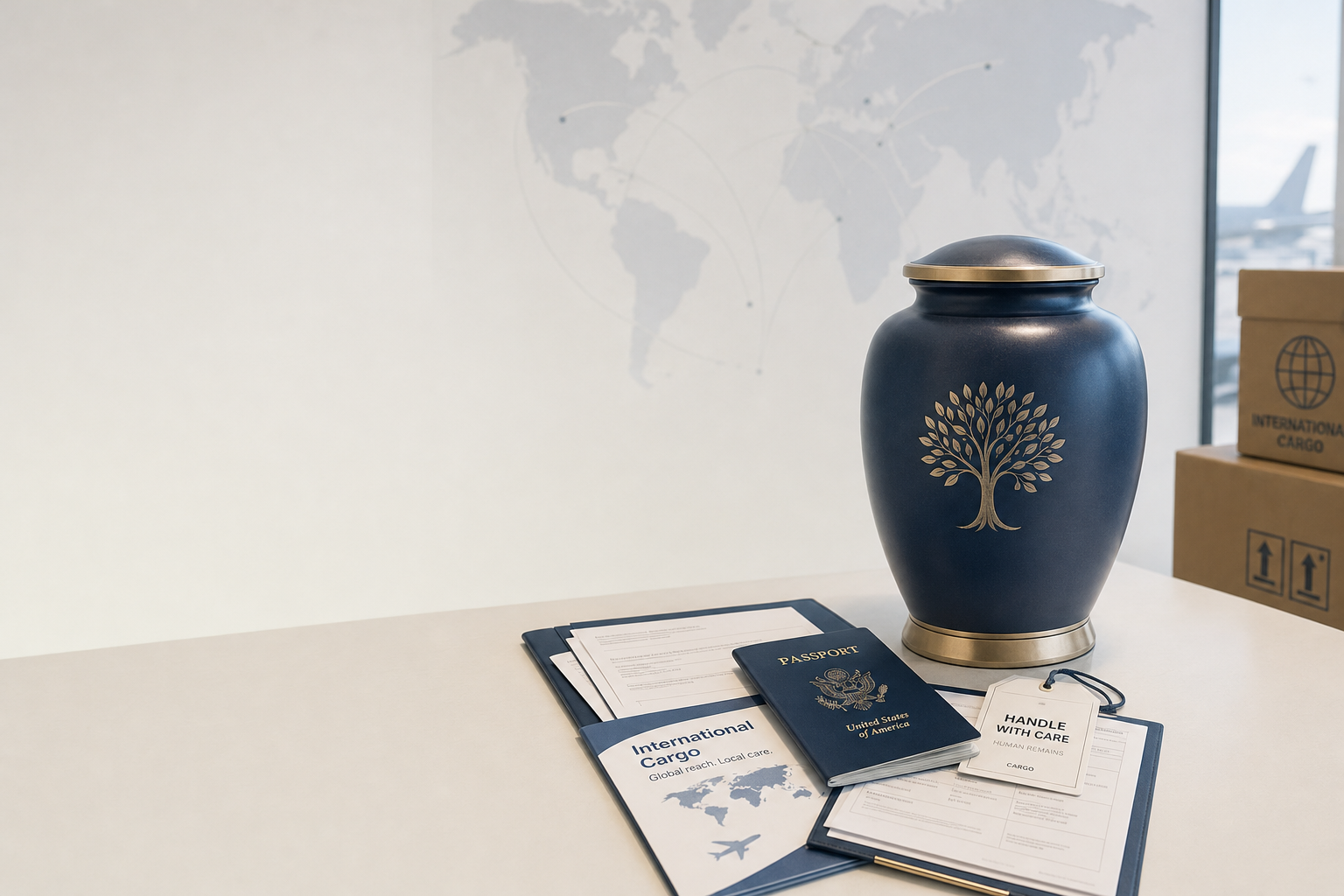
The documents required to recover personal effects differ by country and by the value or type of property involved. Authorities may request proof of identity, proof of relationship, a death certificate, a will, estate documents, or a written authorization from the executor.
Families may wish to prepare digital and printed copies of documents such as:
- The deceased person’s passport or government-issued identification
- The local death certificate, when available
- A Consular Report of Death Abroad or equivalent document, if applicable
- The will, probate documents, or letters of administration
- Identification for the executor or authorized family member
- A signed authorization for a local lawyer, funeral director, or representative
- Travel insurance or assistance policy information
For U.S. citizens, the Department of State states that a Consular Report of Death Abroad may be used by next of kin or legal representatives for estate purposes. However, the report does not replace the local death certificate or automatically determine who is entitled to receive property. ([travel.state.gov](https://travel.state.gov/content/travel/en/international-travel/while-abroad/death-abroad1.htmlwhile-abroad.html?utm_source=openai))
Creating an Inventory Before Shipping
An accurate inventory helps protect the family, the estate, and the person arranging transport. Before items are packed, request a written list of everything being released. If possible, ask for photographs of valuable, fragile, or disputed items.
The inventory should identify:
- Clothing and luggage
- Jewelry, watches, and other valuables
- Electronic devices and chargers
- Passports, identification cards, and financial documents
- Medication and medical equipment
- Keys, cards, cash, and foreign currency
- Photographs, letters, and sentimental items
- Items left in a hotel room, vehicle, hospital, or rental property
Do not assume that everything found belongs in one shipment. Some property may need to remain with a local court, insurer, employer, landlord, or financial institution. Cash, weapons, medications, batteries, plants, food, and other regulated items may require special handling or may not be permitted in ordinary international shipments.
Shipping Belongings to Another Country
Once the belongings are legally released, families can decide whether to send them by courier, air cargo, freight service, or through a professional international funeral or repatriation coordinator. The most suitable option depends on the destination, volume, value, urgency, and type of items.
Before shipping, confirm:
- Whether the destination country permits the items to be imported
- Whether customs declarations are required
- Whether duties, taxes, or brokerage fees may apply
- How fragile, valuable, or sensitive items will be packaged
- Whether the shipment will be insured
- Who will receive and sign for the package
Personal belongings should be packed separately from human remains unless the responsible authorities and transport providers confirm that combined arrangements are permitted. Even when belongings travel at the same time as remains, they may require their own inventory, customs paperwork, and transport instructions.
How Insurance and Estate Administration May Help
Travel insurance, employer assistance programs, credit card benefits, and membership plans may provide help after a death abroad. Coverage varies widely. Some policies may assist with locating belongings, arranging shipment, translating documents, or coordinating with local service providers. Others may cover only specific expenses or exclude personal property altogether.
Contact the insurer as early as possible and ask for written confirmation of:
- What personal-effects services are covered
- Whether a preferred provider must be used
- What receipts or proof of value are needed
- Whether storage costs are covered
- Any limits, exclusions, or deadlines
Belongings are also part of the deceased person’s estate. If the estate is complicated or involves property in more than one country, a lawyer or qualified estate professional can help determine who may receive the items and whether additional legal steps are necessary.
Frequently Asked Questions
Can an embassy or consulate ship personal belongings home?
Sometimes a consular officer may provide limited assistance, particularly when there is no local legal representative. However, embassies and consulates generally do not act as personal shipping companies, and they may not store, pack, or pay to transport belongings. Families should ask the relevant mission what assistance is available in that country.
Can belongings be shipped with the deceased person’s remains?
That depends on local law, airline requirements, customs rules, and the transport provider. Some belongings may be included under specific conditions, while others must be shipped separately. A professional coordinator can help identify which items require separate arrangements.
What if the family cannot travel to collect the belongings?
The family may be able to authorize a local funeral director, lawyer, insurer, or trusted representative to collect and ship the items. Written authorization and proof of legal authority may be required.
What happens if no one claims the belongings?
Unclaimed property may be handled under local law. It could be transferred to a court, public authority, property manager, or other designated custodian. Contact the local police, hospital, coroner, hotel, or embassy promptly to learn the applicable procedure.
Conclusion
Recovering personal belongings after a death abroad requires patience, documentation, and careful coordination. Items may pass through several hands before they can be released, and an investigation or estate dispute can delay the process.
Families can reduce confusion by identifying the responsible authority, confirming legal authorization, creating a detailed inventory, checking insurance coverage, and verifying customs requirements before shipping. Because procedures differ between countries, always obtain country-specific guidance before making arrangements.