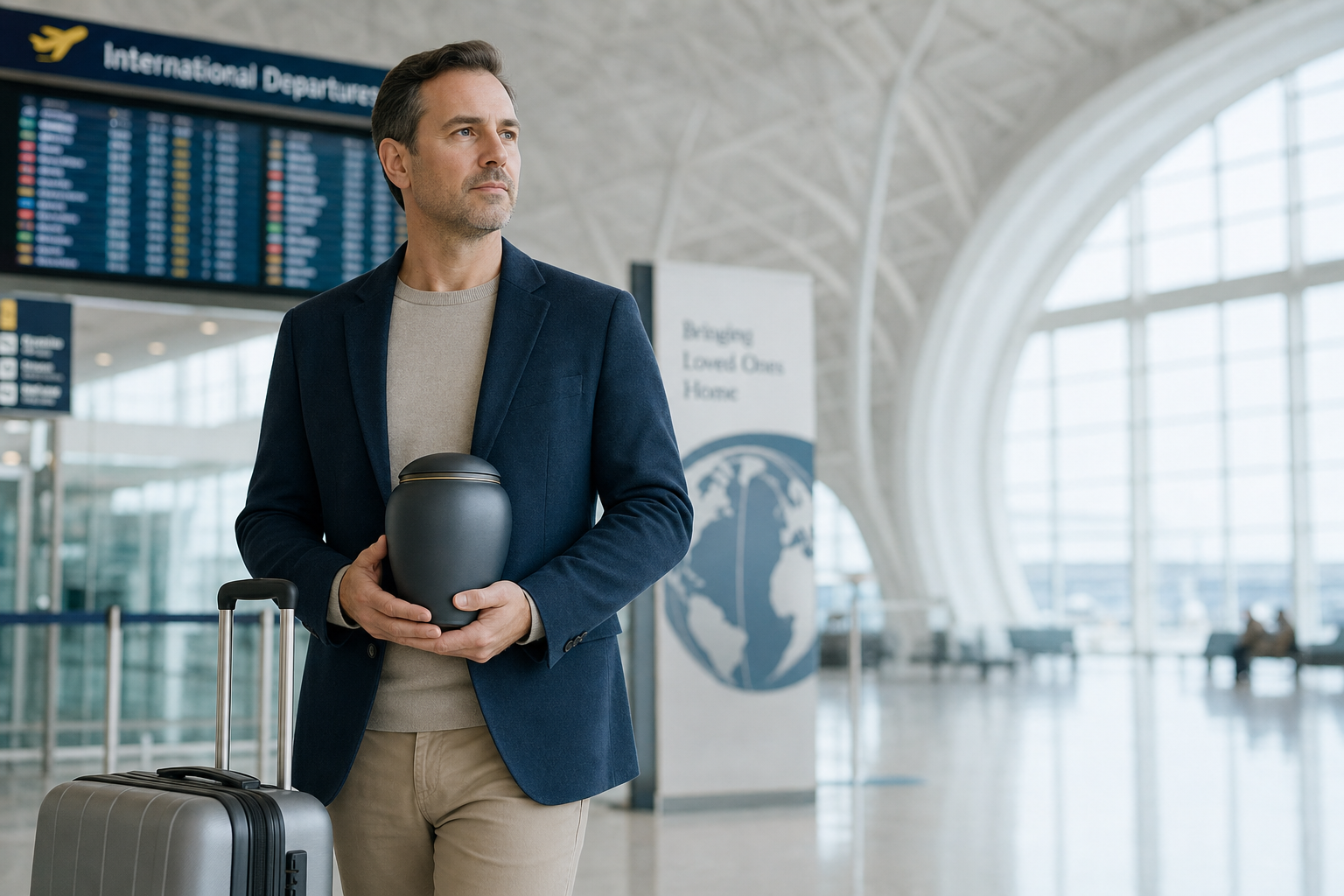
When a loved one is cremated in another country, families may wish to bring the cremated remains home personally or accompany them to a final destination. Although transporting ashes is often simpler than moving intact human remains, international travel still involves important decisions about documentation, packaging, airline policies, airport screening, and the laws of the countries involved.
Every journey is different. Requirements may depend on the country where the cremation occurred, the country being entered, the airline, the airport, and the purpose of travel. Families should confirm the current rules with the relevant embassy or consulate, airline, funeral home, crematory, and border authorities before making travel arrangements.
Can You Travel Internationally With Cremated Remains?
In many situations, cremated remains may travel by air either as checked baggage, carry-on baggage, or air cargo. However, permission to travel does not automatically mean that every airline or destination will accept the remains in the same way. Some countries require cremated remains to be declared before arrival, while some airlines apply their own restrictions on baggage, containers, or advance notification. ([tsa.gov](https://www.tsa.gov/travel/security-screening/whatcanibring/all-list?pubDate=20250608&utm_source=openai))
The first step is to identify the exact travel route. A direct flight may involve fewer transfer points and fewer opportunities for confusion than a journey with several connections. If a connection crosses another country, that country’s transit requirements may also matter, even when the traveler does not leave the airport.
Documents Commonly Requested
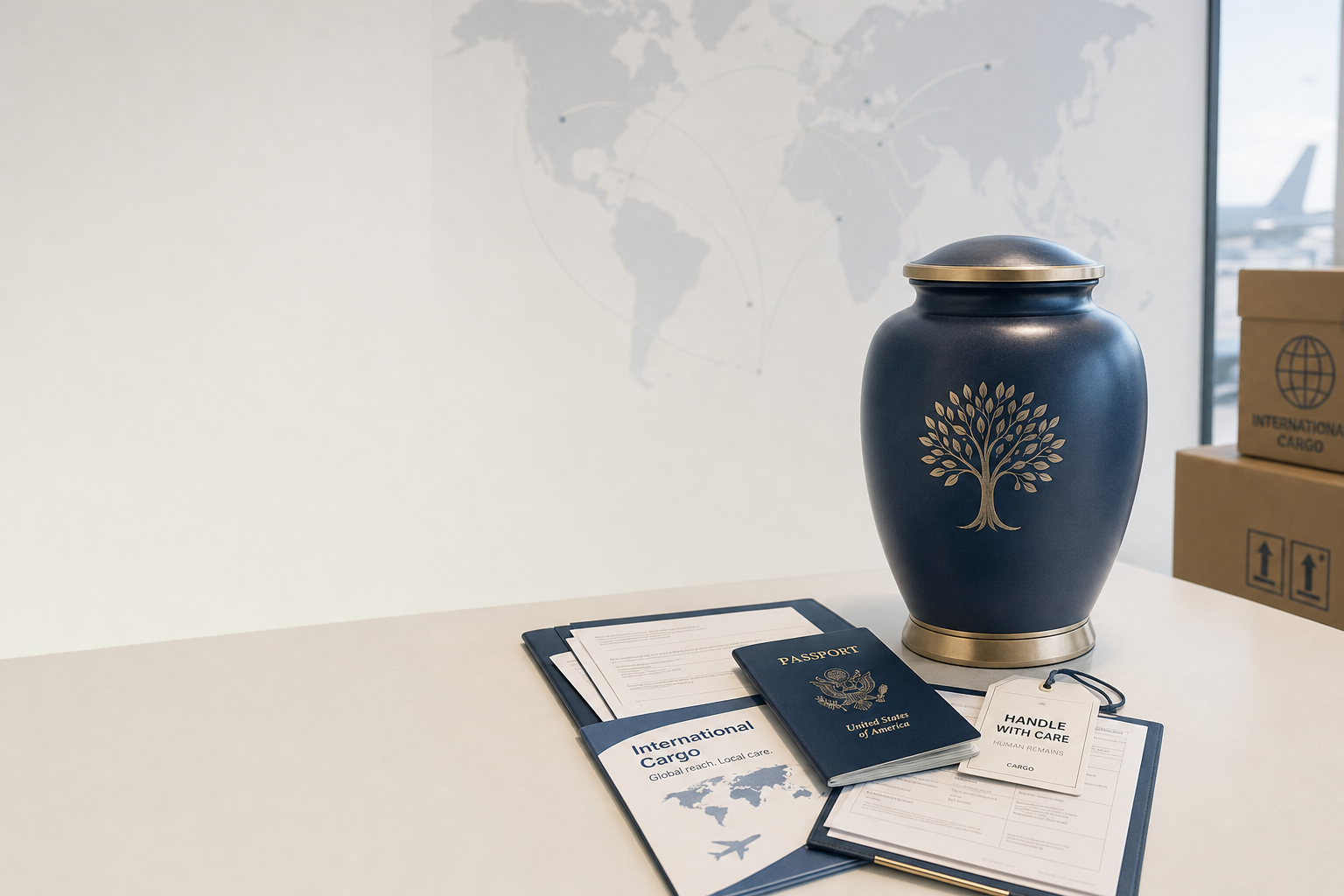
There is no single worldwide document package for transporting cremated remains. Still, families are often asked to carry documents that establish the identity of the deceased, confirm the death, and verify that cremation took place.
Depending on the route, the documentation may include:
- An official death certificate
- A cremation certificate or certificate of disposition
- A certificate from the crematory identifying the remains
- A permit or authorization required by the destination country
- Certified translations when documents are not written in an accepted language
- Proof of relationship or authorization from the next of kin, when requested
- Import, export, or transit documentation issued by a government authority
For U.S. citizens who die abroad, a U.S. embassy or consulate can provide information about local procedures and may prepare a Consular Report of Death Abroad. The Department of State explains that the local death certificate is issued by the foreign authority, while the consular report may be used in the United States for certain estate and legal matters. ([travel.state.gov](https://travel.state.gov/content/travel/en/international-travel/while-abroad/death-abroad1.htmlwhile-abroad.html?utm_source=openai))
Documents should be kept together in a protective folder, with several paper copies and secure digital copies where possible. Do not assume that a document used for local cremation will satisfy the requirements of the next country in the itinerary.
Choosing an Appropriate Urn or Container
The urn is both a memorial object and a transport container. For air travel, security screening is an important consideration. The Transportation Security Administration states that cremated remains are permitted in carry-on and checked baggage, but some airlines do not allow them in checked bags. TSA also recommends a container made from a material such as wood or plastic because opaque materials can prevent officers from clearly viewing the contents during screening. ([tsa.gov](https://www.tsa.gov/travel/security-screening/whatcanibring/all-list?pubDate=20250608&utm_source=openai))
A practical travel container should be:
- Securely sealed and appropriately sized for the remains
- Durable enough to withstand handling and changes in pressure
- Lightweight enough to meet baggage limits
- Made from a material that can be screened clearly
- Placed inside protective packaging to reduce the risk of damage
Some families use a temporary travel container and transfer the remains to a permanent urn after arrival. This may be helpful when the permanent urn is made from metal, stone, ceramic, or another material that could make security screening more difficult. Ask the airline and airport security authority before travel rather than relying on assumptions.
Carry-On or Checked Baggage?
Whenever permitted, many travelers prefer to keep cremated remains in their carry-on baggage so they remain under personal supervision. This can reduce the risk of baggage delays or mishandling. However, airline rules differ, and some carriers may require advance arrangements or may direct travelers to use cargo services instead.
TSA officers do not open cremation containers during screening, even if a passenger requests it. If the container cannot be cleared through the screening process, the traveler may not be allowed to take it through the checkpoint. ([tsa.gov](https://www.tsa.gov/travel/security-screening/whatcanibring/all-list?pubDate=20250608&utm_source=openai))
Before booking, contact every airline operating the itinerary and ask specifically:
- Are cremated remains accepted in carry-on baggage?
- Are they permitted in checked baggage?
- Is advance notice or written approval required?
- Are there container size, weight, or material requirements?
- Do the rules change for international connections?
- Should the remains travel as cargo instead?
Checking the Rules of the Destination Country
The destination country may impose requirements that are separate from airline and airport rules. These may include prior approval, customs declarations, a translated death certificate, a cremation certificate, an import permit, or delivery through a licensed funeral director. Regulations can also differ depending on whether the remains will be buried, placed in a columbarium, scattered, or transported onward to another country.
The U.S. Department of State advises that burial or cremation arrangements involving a death abroad must comply with both foreign and U.S. law, and that local customs and facilities may differ considerably. Families should contact the embassy or consulate of the destination country and ask for the current requirements in writing whenever possible. ([travel.state.gov](https://travel.state.gov/content/travel/en/international-travel/while-abroad/death-abroad1.htmlwhile-abroad.html?utm_source=openai))
It is also important to verify requirements for the country where the cremation occurred. Export procedures may need to be completed before the traveler can leave, and some authorities may require certified documentation from the crematory or local health department.
How to Prepare Before the Journey
Allow more time than a normal international trip. Government offices, crematories, airlines, and consulates may have different processing times, especially when translations, authentication, or permits are required.
- Confirm the final destination and every transit country.
- Ask the airline for its current written policy.
- Contact the destination country’s embassy or consulate.
- Obtain the death and cremation documents.
- Arrange certified translations if required.
- Select a security-friendly travel container.
- Carry the originals and multiple copies of all documents.
- Arrive early and tell airport personnel that you are traveling with cremated remains.
If the family is uncomfortable managing the arrangements personally, a funeral director or international repatriation specialist may coordinate documentation, airline requirements, customs communication, and delivery to a receiving funeral home.
Frequently Asked Questions
Do cremated remains need to be shipped as cargo?
Not always. Cremated remains may be accepted as carry-on or checked baggage, but airline policies vary. Some routes or countries may require cargo transportation or advance approval. Confirm the policy directly with the airline operating each flight. ([tsa.gov](https://www.tsa.gov/travel/security-screening/whatcanibring/all-list?pubDate=20250608&utm_source=openai))
Can I use a decorative metal urn?
Possibly, but a metal or other opaque urn may make airport screening difficult. A temporary container made from wood or plastic may be more practical for air travel, followed by transfer to a permanent urn after arrival. ([tsa.gov](https://www.tsa.gov/travel/security-screening/whatcanibring/all-list?pubDate=20250608&utm_source=openai))
What documents should I carry?
Commonly requested documents include the death certificate and cremation certificate, but the exact requirements depend on the countries and airline involved. Additional permits, translations, or consular documents may be necessary.
Should I tell airport security about the remains?
Yes. Inform the airline and security personnel before screening begins. Keeping the documents accessible can help explain the contents and reduce delays.
Conclusion
Traveling internationally with cremated remains can be arranged, but respectful preparation is essential. The safest approach is to confirm the rules at every stage of the journey: the crematory, departure country, airline, transit points, destination country, and receiving facility. With the right documents, a suitable container, and enough planning time, families can carry out this final act of care with greater confidence and fewer unexpected complications.