When a loved one is cremated in one country and the family wishes to bring the ashes to another, the process is often more manageable than transporting a body. However, international travel with cremated remains still requires careful planning. Airline policies, airport security procedures, customs rules, and destination-country requirements can all affect what is needed.
Families should not assume that a document or container accepted in one country will be accepted everywhere else. Requirements can vary by airline, departure airport, transit country, and final destination. The safest approach is to begin planning early and confirm each requirement with the airline, consulate, customs authority, and funeral professional involved.
Can Cremated Ashes Be Transported Internationally?
In many situations, cremated remains may travel internationally either as accompanied baggage or as specially arranged air cargo. The available option depends on the airline, route, airport procedures, and the laws of the country receiving the ashes. The International Air Transport Association explains that there is no single universal international standard for processing and documenting human remains, which is why country and airline rules must be checked for each shipment. ([iata.org](https://www.iata.org/en/publications/newsletters/iata-knowledge-hub/what-you-need-to-know-about-the-transportation-of-human-remains-by-air/?utm_source=openai))
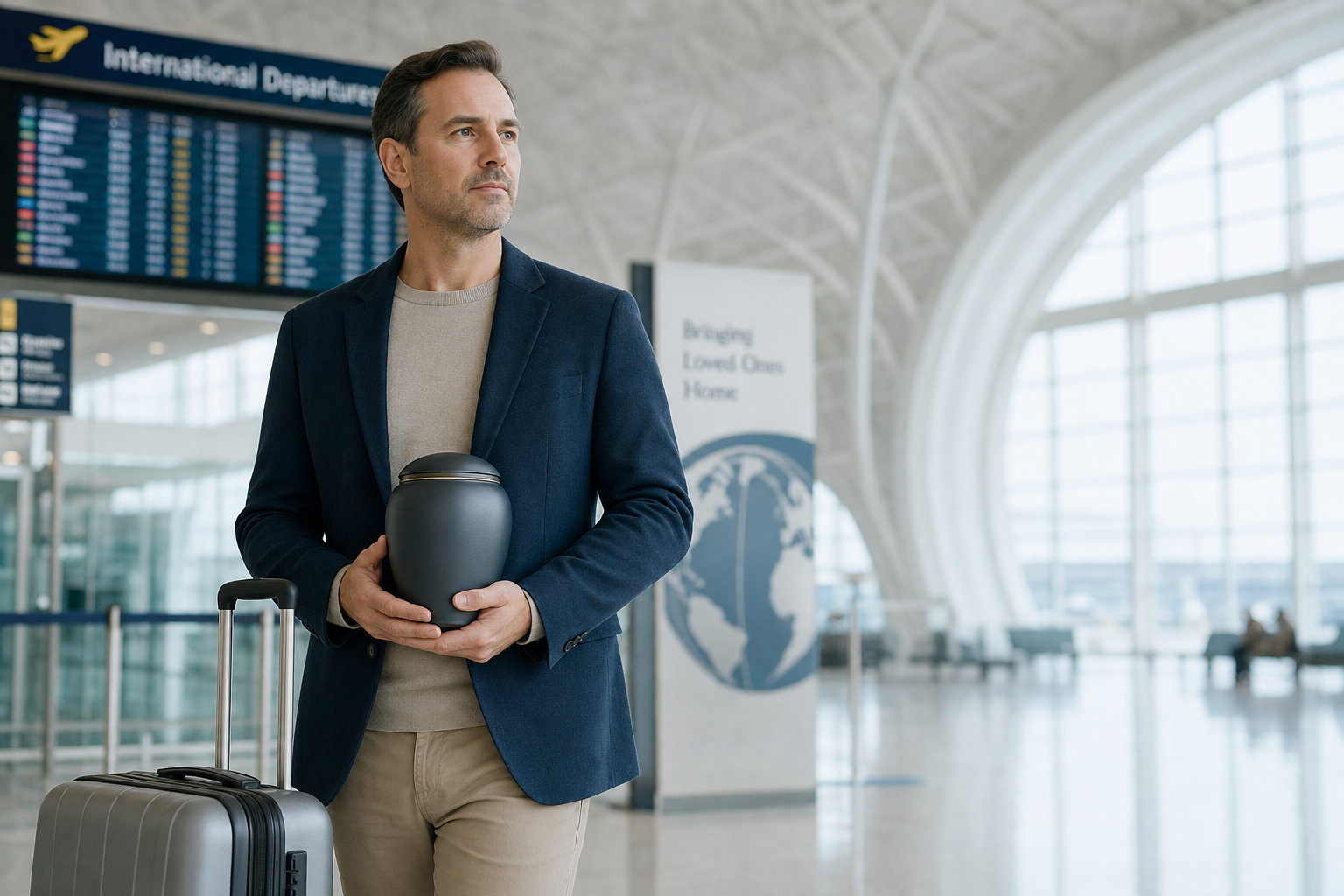
Some families choose to carry the urn themselves during a personal journey. Others prefer to use a funeral home, repatriation provider, or cargo service, particularly when they cannot travel or when the destination has complex import requirements.
Documents Commonly Needed
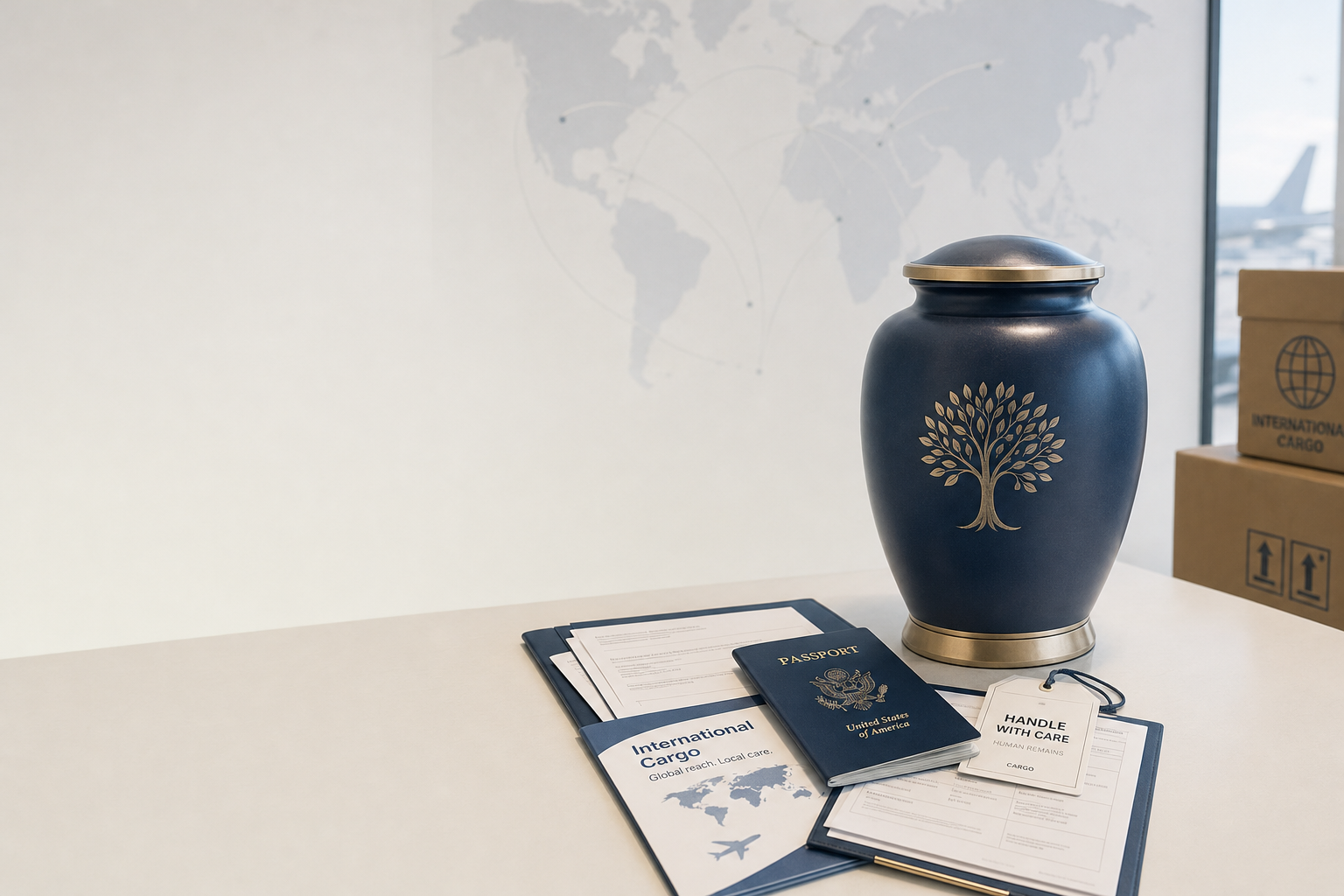
Although the exact paperwork differs, families are commonly asked to carry or provide documents that establish the identity of the deceased, confirm the cremation, and show that the ashes are being transported lawfully.
Potential documents may include:
- Certified copy of the death certificate
- Certificate of cremation or cremation statement
- Identification details for the deceased
- Funeral home or crematory authorization
- Authorization from the next of kin, where required
- Import, transit, or health documents required by the destination country
- Certified translations or document authentication, when requested by authorities
This is not a universal checklist. Some destinations may require additional permits, consular involvement, or translated and authenticated records. The U.S. Department of State advises that burial or cremation arrangements must comply with both local law and the law applicable to the destination, and that families should work with the relevant embassy or consulate for country-specific guidance. ([travel.state.gov](https://travel.state.gov/content/travel/en/international-travel/while-abroad/death-abroad1.htmlwhile-abroad.html?utm_source=openai))
Choosing the Right Urn or Temporary Container
The urn is both a meaningful memorial item and an important part of the transportation process. A permanent decorative urn may be beautiful, but dense materials such as metal, stone, or thick ceramic can create difficulties during airport screening if security officers cannot clearly view the contents through X-ray equipment.
For air travel, families may consider using a temporary container made from a screening-friendly material, such as plastic, wood, or cardboard, and transferring the ashes to a permanent urn after arrival. The container should be sealed securely, labeled appropriately, and protected against accidental opening.
Airline requirements are not identical. For example, Air Canada advises travelers to use an X-ray-compatible container and recommends carrying the death certificate and certificate of cremation. Its published guidance also notes that final screening decisions are made by the relevant security authority, not by airline staff. ([aircanada.com](https://www.aircanada.com/tw/en/aco/home/plan/baggage/carry-on.html?utm_source=openai))
Traveling With Cremated Ashes in Carry-On Baggage
Carrying ashes in hand luggage may allow the traveler to keep them close and avoid the risk of checked baggage delays or loss. Before choosing this option, contact every airline on the itinerary, including airlines operating connecting flights. Ask whether cremated remains are permitted in the cabin and whether advance notice is required.
At the airport, the urn may need to go through security screening separately. Security personnel generally need to be able to screen the container without opening it. If the container blocks a clear image, the traveler may be refused permission to take it through the checkpoint, even if the airline itself permits cremated remains.
Families should also allow extra time at the airport and carry the ashes in a protective case that is easy to remove from the hand luggage. Keep all supporting documents together in an accessible folder rather than packed in checked baggage.
Shipping Ashes as Air Cargo
Air cargo may be more appropriate when the family is not traveling, when the urn is too large or fragile for cabin transport, or when the destination requires formal shipment through a funeral professional. A funeral home or repatriation specialist can coordinate collection, packaging, airline booking, airport handling, and delivery to a receiving funeral home or family representative.
International cargo arrangements require accurate information about the origin, destination, transit points, dimensions, weight, and contents of the package. The carrier may also require specific labels, packaging, and advance booking. IATA guidance emphasizes the importance of correct packing, marking, labeling, and documentation when human remains are transported by air. ([iata.org](https://www.iata.org/en/publications/manuals/compassionate-transportation-manual/?utm_source=openai))
Families should request a written summary of the proposed arrangements, including who will receive the urn at the destination and how delivery will be confirmed.
Customs and Destination-Country Rules
International transport does not end when the aircraft lands. Customs officials may review the documents, inspect the package externally, or request evidence that the ashes were cremated and are being imported for a lawful purpose. Some countries require pre-approval from a consulate, health ministry, cemetery authority, or other government office.
Transit countries can also matter. A connection through another country may create additional documentation requirements, even if the traveler does not leave the airport. For this reason, a route with fewer connections may be preferable when it is practical and available.
Because regulations can change and differ widely, families should verify requirements directly with the destination country’s embassy or consulate and the airline’s current special-assistance or cargo department. Do not rely solely on information from an old travel experience or an unrelated route.
Practical Steps Before Departure
- Confirm whether the ashes will travel as cabin baggage, checked baggage, or cargo.
- Contact each airline on the itinerary and request its current written policy.
- Ask the destination consulate which documents, permits, translations, or authentication steps apply.
- Obtain certified copies of the death certificate and cremation certificate.
- Choose a secure, screening-friendly temporary container if traveling by air.
- Make copies of every document and keep the originals with the traveler or authorized representative.
- Allow additional airport time and confirm who will receive the ashes after arrival.
Frequently Asked Questions
Do I need a death certificate to travel with ashes?
Many airlines and authorities recommend or require a death certificate, and a certificate of cremation may also be requested. Requirements vary, so confirm the exact documents before departure.
Can ashes be placed in a checked suitcase?
Some airlines may permit cremated remains in checked baggage, while others may impose restrictions or recommend carry-on transport. Checked baggage can also be delayed or mishandled, so discuss the safest option with the airline.
Can airport security open the urn?
Security procedures differ by country and airport. In some systems, officers may not open the container, which makes an X-ray-compatible urn especially important. Ask the departure airport or security authority if you have concerns.
Is a special permit always required?
No single rule applies worldwide. Some destinations may require only supporting documents, while others may require permits, consular processing, or formal cargo arrangements.
Conclusion
Transporting cremated ashes internationally requires thoughtful coordination, but early preparation can reduce stress and prevent avoidable delays. The most important steps are confirming the destination’s rules, checking every airline’s policy, using an appropriate container, and keeping complete documentation available throughout the journey.
When the route or requirements are complicated, a qualified funeral home or international repatriation specialist can help coordinate the arrangements with the appropriate authorities and carriers. Above all, families should receive clear guidance and enough time to make decisions that respect both their loved one and their own wishes.