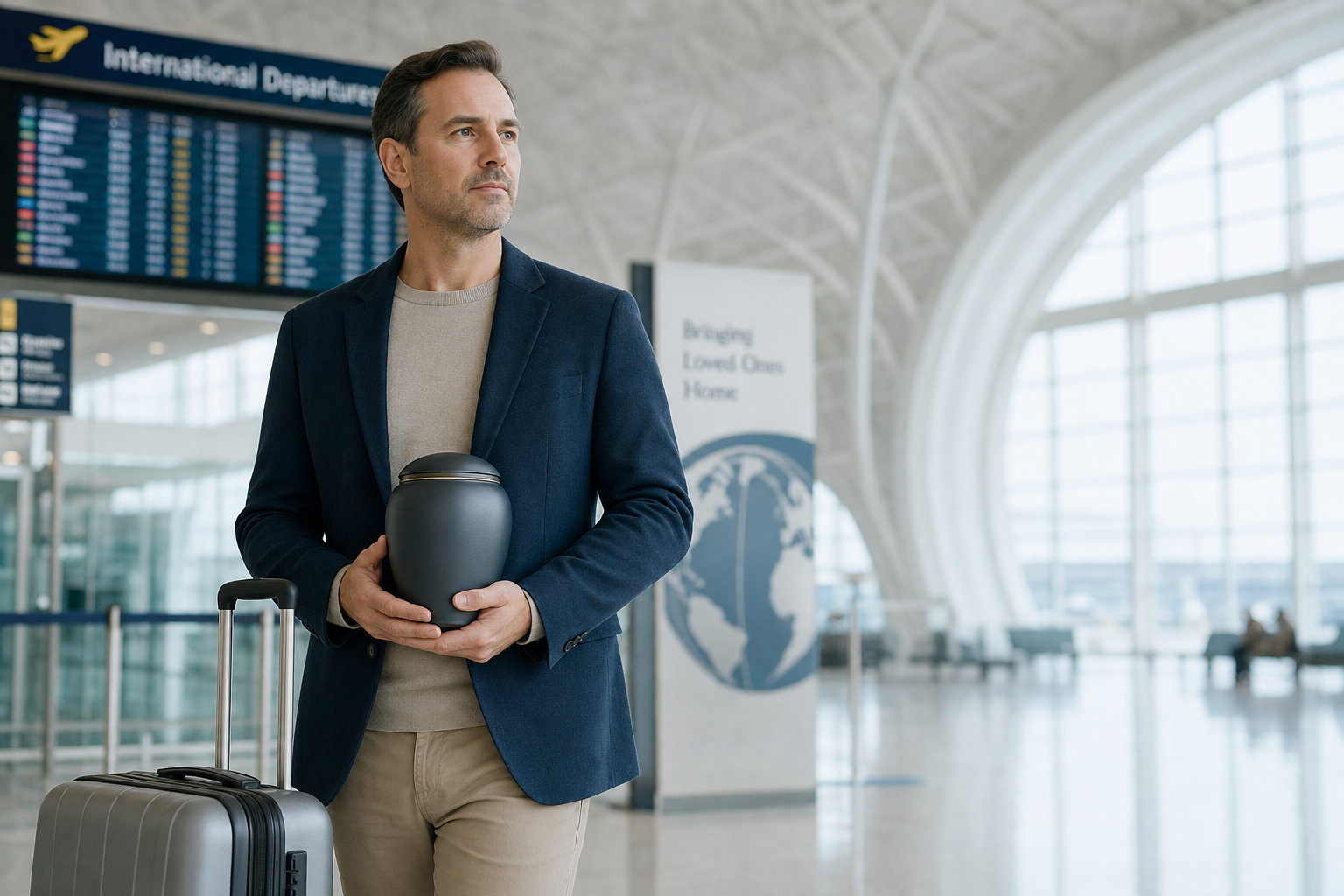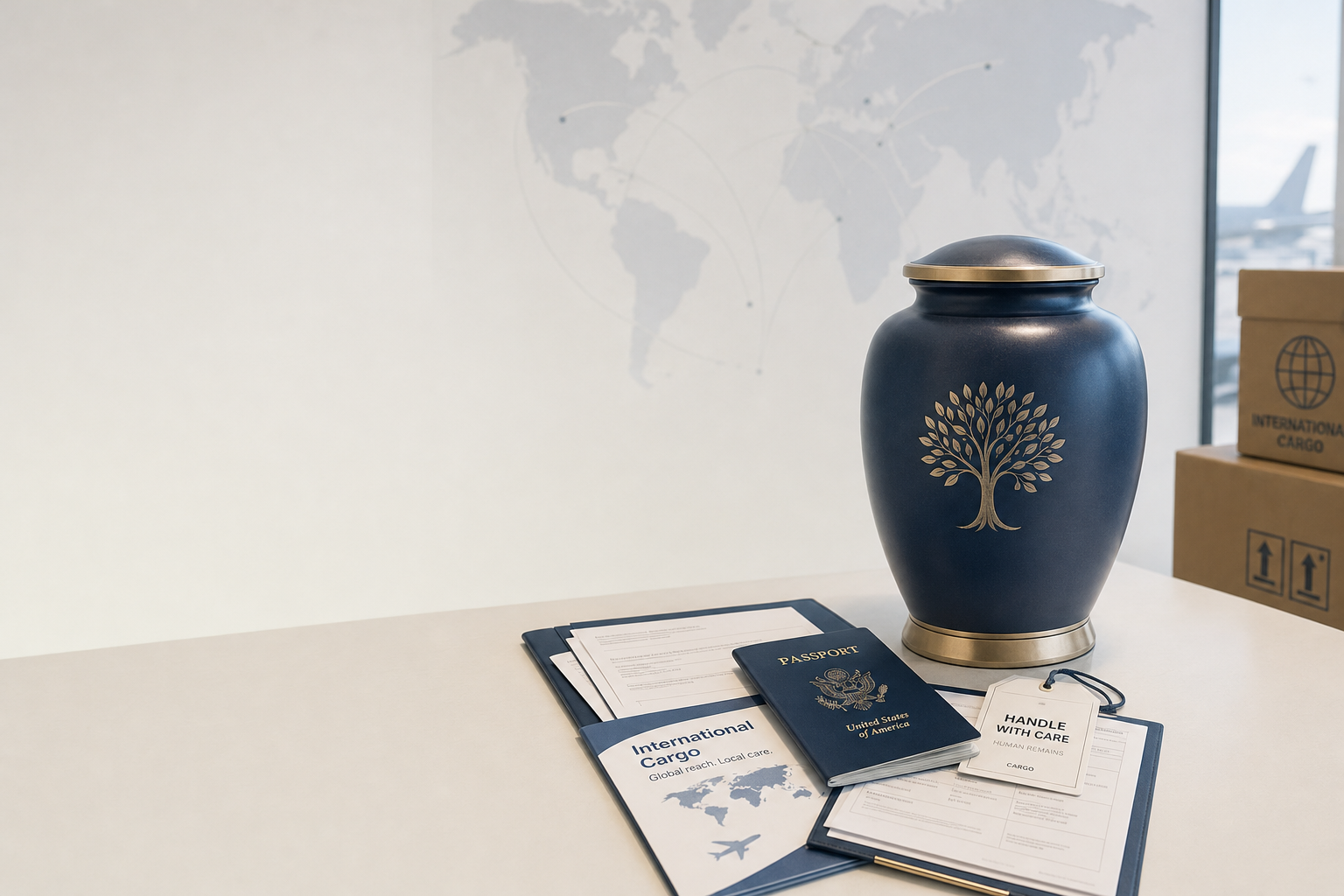
When a loved one dies in another country, families often have urgent questions about how the person will be prepared for the journey home. One of the most important subjects is embalming. Although embalming is commonly associated with funeral ceremonies, it may also play a practical role in preparing human remains for international transportation.
However, embalming is not governed by one universal international rule. Requirements can depend on the country where death occurred, the destination country, the cause of death, the condition of the remains, the airline, and the timing of transportation. Families should therefore treat embalming as one part of a coordinated process involving licensed funeral professionals, public health authorities, consular officials, and the carrier.
What embalming means in an international repatriation case
Embalming is a professional preparation procedure intended to temporarily slow natural changes after death and help protect the condition of the remains during handling and transport. It is performed by a qualified professional according to applicable local laws and professional standards.
For international repatriation, the purpose is not to preserve the body indefinitely. Instead, preparation may help support a safe transfer from the place of death to a funeral home, airport, receiving funeral home, cemetery, or crematory. It can also help meet requirements established by the destination country or airline.
Some destinations or carriers may require embalming before accepting non-cremated remains. Others may accept alternative preparation methods, such as secure containment or cremation. The International Air Transport Association’s Compassionate Transportation Manual addresses airline acceptance, documentation, packing, handling, marking, labeling, and special guidance for transporting human remains by air. ([iata.org](https://www.iata.org/en/publications/manuals/compassionate-transportation-manual/?utm_source=openai))
Why embalming may be requested before air transportation
Air transportation involves multiple stages of handling, including local transfer, mortuary storage, airport acceptance, loading, flight operations, customs or health inspection, and delivery at the destination. Preparation and packaging must be planned to protect the remains and reduce the risk of leakage or exposure during these stages.
For example, current U.S. Centers for Disease Control and Prevention guidance states that non-cremated remains imported into the United States must be fully contained in a leak-proof container. The CDC identifies possible options such as a puncture-resistant sealed body bag, a casket with a certified leak-proof and puncture-resistant lining, or a sealed metal body transfer case. ([cdc.gov](https://www.cdc.gov/importation/human-remains/index.html?utm_source=openai))
Embalming may be one element of meeting a country’s or carrier’s requirements, but it does not replace secure containment, documentation, permits, or airline approval. A family should never assume that embalming alone makes a shipment acceptable for international travel.
Is embalming always required?
No. Whether embalming is required varies widely. Some countries may require an embalming certificate or evidence of preparation before export or import. Some airlines may accept only embalmed remains for particular routes, while others may have different procedures for cremated remains.
In the United States, CDC guidance states that no CDC import permit is required for human remains that have already been fully embalmed or cremated, although other legal, airline, and destination requirements may still apply. The same guidance explains that remains associated with certain infectious diseases may require additional public health measures and, in some circumstances, a CDC import permit if the remains have not been embalmed or cremated. ([cdc.gov](https://www.cdc.gov/importation/human-remains/index.html?utm_source=openai))
These rules should not be interpreted as a universal requirement to embalm. They show why each case must be reviewed individually. The correct preparation depends on the complete route and circumstances rather than on a single checklist used for every country.
How the cause of death can affect preparation
The cause of death is an important factor in deciding how remains may be prepared and transported. If an infectious disease is involved or suspected, authorities may impose additional restrictions. Certain diseases may limit embalming, require special containment, affect airline acceptance, or make local burial or cremation the only practical option.
For example, UK government guidance concerning viral haemorrhagic fevers states that infected bodies should not be embalmed because of the associated risk, and that transportation out of the country may not be recommended in those circumstances. ([gov.uk](https://www.gov.uk/government/publications/viral-haemorrhagic-fever-acdp-algorithm-and-guidance-on-management-of-patients/risk-assessment-and-immediate-management-of-viral-haemorrhagic-fevers-contact-high-consequence-infectious-diseases-in-acute-hospitals?utm_source=openai))
This is one reason families should provide funeral professionals and authorities with accurate medical information. If an autopsy, trauma, communicable disease, or unknown cause of death is involved, the preparation plan may need to be adapted. Funeral professionals can coordinate with health departments, medical examiners, hospitals, and consular personnel when additional guidance is needed.
What preparation may involve
The exact preparation plan is determined by licensed professionals and applicable regulations. Depending on the case, it may include:
- Identification and verification of the deceased before preparation
- Review of the cause and circumstances of death
- Embalming or another approved form of preparation, when permitted or required
- Placement in a leak-proof inner container or body transfer case
- Use of a casket or outer shipping container accepted for the intended route
- Completion of preparation or embalming certificates
- Coordination of certificates, permits, translations, and consular documents
- Confirmation that the airline has accepted the shipment and route
Families may also need to discuss implanted medical devices, personal effects, religious practices, viewing preferences, and whether a funeral service will occur before or after arrival. Certain medical devices or unusual circumstances may require special handling, so this information should be shared as early as possible.
Questions families should ask before preparation begins
Clear communication can prevent delays and reduce uncertainty. Families may wish to ask:
- Is embalming required by the destination country, departure country, or airline?
- Are there religious or cultural alternatives that can be accommodated?
- What type of container is required for this route?
- Will the receiving funeral home accept the remains in the selected container?
- Are any health permits or infectious-disease approvals necessary?
- Which documents will confirm that preparation was completed?
- Will documents need certification, notarization, apostille, or translation?
- Who is responsible for airline approval and final document review?
Requirements can change depending on the route and the circumstances of death. A funeral professional experienced in international transportation should confirm the current requirements directly with the relevant authorities, receiving funeral home, and airline rather than relying on outdated general advice.
Embalming, cultural preferences, and family decisions
Families may have religious, cultural, or personal reasons for accepting or declining embalming. These preferences deserve respectful consideration. At the same time, a requested destination may have rules that limit the available options.
When embalming conflicts with a family’s beliefs, alternatives may sometimes be available, such as expedited transportation, cremation, or specially approved containment. These alternatives are not guaranteed and may depend on local law, airline policy, public health requirements, and the receiving arrangements. Discussing preferences at the beginning gives professionals more time to identify lawful and respectful options.
Frequently Asked Questions
Does embalming guarantee that human remains can fly internationally?
No. Embalming is only one part of the process. The shipment may also require an approved container, death certificate, permits, preparation certificates, consular documents, translations, and airline confirmation.
Can a family request that embalming not be performed?
Families can express their preferences, but the final options may be limited by the law of the country where death occurred, the destination country, public health rules, or airline requirements. A qualified funeral professional can explain available alternatives.
Does the receiving country decide whether embalming is required?
Not always. Requirements may come from multiple authorities, including the country of death, destination authorities, transit countries, airlines, airports, and local funeral or cemetery officials.
Are cremated remains treated the same way?
No. Cremated remains often follow a different transportation and import process. The urn, documentation, airline rules, and destination requirements should still be confirmed before travel.
Conclusion
Embalming for international repatriation is not a single universal requirement. It is a case-specific decision shaped by health regulations, airline acceptance standards, destination laws, cultural preferences, and the circumstances of death.
Families should ask questions early, provide complete information, and work with professionals who can coordinate preparation, secure containment, documentation, and transportation as one connected plan. With careful planning and respectful communication, the necessary arrangements can be handled with greater clarity during an already difficult time.