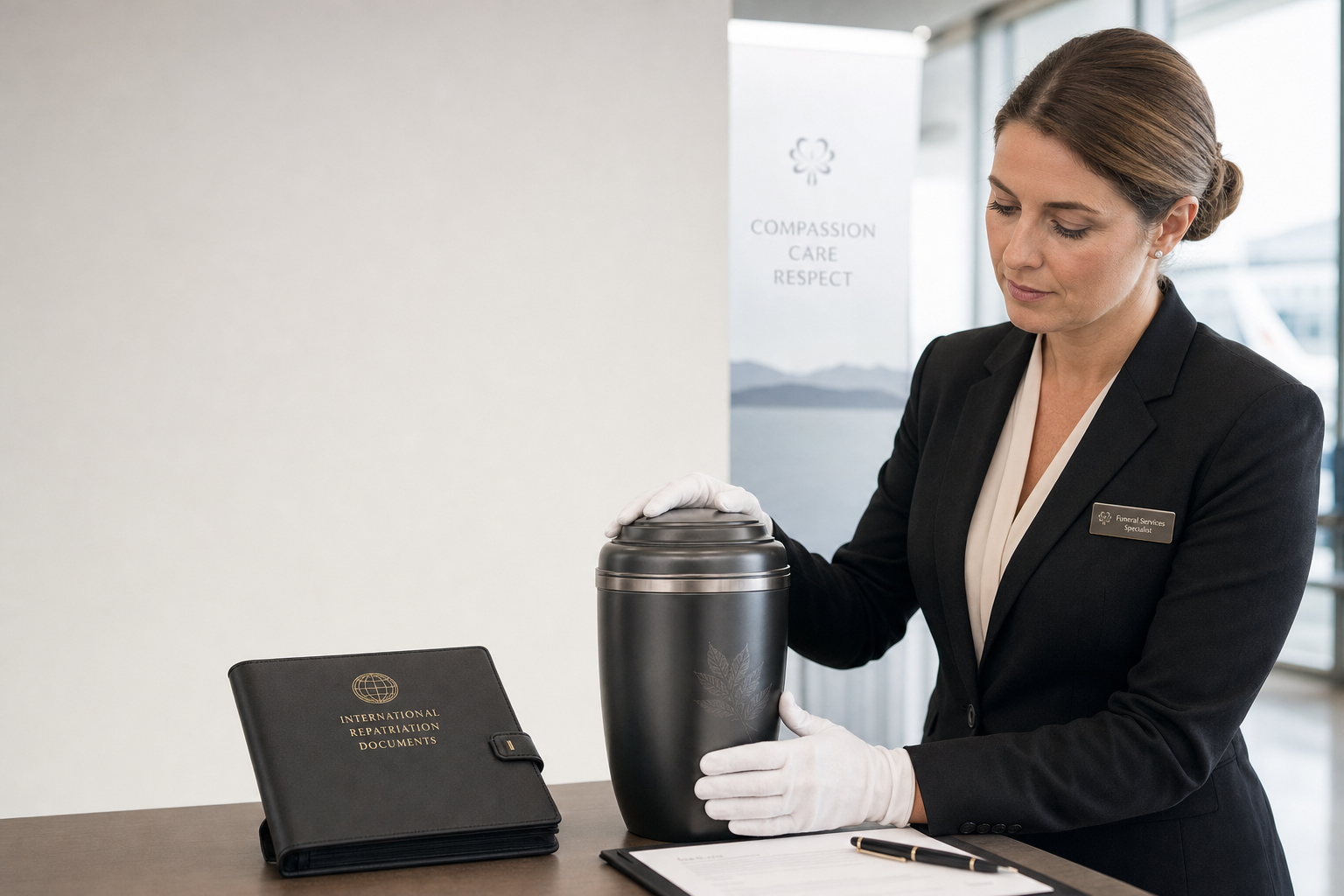
When a loved one needs to be transported across international borders, families often hear the word “embalming” before they understand what it means for the repatriation process. The decision can feel technical and emotionally difficult, especially when different countries, airlines, and authorities have their own requirements.
Embalming is one possible part of preparing non-cremated human remains for international air transport. It may help with preservation and presentation, but it is not automatically required for every journey. The correct preparation depends on the country where the death occurred, the destination country, transit locations, the cause of death, the airline, and the family’s wishes. A licensed funeral professional or repatriation specialist should confirm the requirements for the specific route before arrangements are finalized.
What embalming means in an international transport context
Embalming is a professional process intended to temporarily slow natural changes after death. It may involve treating the body with preservative solutions and preparing it for viewing, burial, or transportation. The process is performed by qualified professionals according to local law, professional standards, and the condition of the deceased.
For international transportation, embalming is considered alongside other safeguards, including a suitable container, identification procedures, documentation, and controlled handling. It should not be viewed as a substitute for proper packaging or permits. International carriers and government authorities may require several measures to be completed together before accepting the shipment.
Families should also understand that embalming does not permanently preserve a body. It is a temporary preservation measure, and the length of time it remains effective depends on many factors, including the time since death, environmental conditions, the condition of the remains, and the type of preparation performed.
Is embalming always required for international repatriation?
No. Embalming requirements vary significantly by route. Some destinations or local authorities may require embalming before export, while other jurisdictions may allow unembalmed remains if they are placed in an approved leak-proof container and accompanied by the necessary documents.
For example, the U.S. Department of State explains that embalming is not needed for entry into the United States when specific conditions are met, including a death certificate identifying a non-quarantinable cause of death and transport in a leak-proof container. However, the local government in the country where the death occurred may not allow unembalmed remains to be shipped. ([travel.state.gov](https://travel.state.gov/content/travel/en/international-travel/while-abroad/death-abroad1.htmlwhile-abroad.html?utm_source=openai))
This distinction is important. A destination country may permit unembalmed remains, while the departure country, transit country, or airline may impose additional requirements. The most practical approach is to verify the full route rather than relying on a general rule.
Why preservation and containment matter during air transport
International air transport can involve long periods of handling, storage, customs inspection, and transfer between facilities. Proper preparation helps reduce the risk of leakage, damage, delays, and difficulties during acceptance or arrival.
The U.S. Centers for Disease Control and Prevention requires non-cremated remains entering the United States to be fully contained in a leak-proof container. The container must be puncture-resistant and sealed to prevent leakage during handling, storage, and transportation. Examples may include a sealed metal transfer case, a casket with a certified leak-proof lining, or a double-layered puncture-resistant body bag. ([cdc.gov](https://www.cdc.gov/importation/human-remains/index.html?utm_source=openai))
These measures are intended to protect airline personnel, airport workers, funeral professionals, and the public from potential exposure to blood or other body fluids. They are also part of maintaining dignity and security throughout the transport process.
How the cause of death can affect preparation
The cause of death may affect whether embalming is appropriate, whether a health certificate is needed, and whether a government permit is required. Infectious disease concerns can introduce additional restrictions, and certain conditions may affect the timing or method of preparation.
In the United States, the CDC states that remains of a person who died from an infectious disease may require an import permit unless the remains have been embalmed. However, families should not interpret this as a universal rule for every country or disease. Public health requirements can differ, and some illnesses may require specialized handling or make embalming unsuitable. ([cdc.gov](https://www.cdc.gov/importation/human-remains/index.html?utm_source=openai))
For that reason, the funeral director should be told about the known or suspected cause of death as early as possible. Complete and accurate medical information helps professionals determine which authorities must be contacted and what preparation is safe and lawful.
Documents commonly connected with embalming and preservation
Documentation varies by country, but authorities and airlines may request records confirming how the remains were prepared. Depending on the route, families may encounter documents such as:
- Official death certificate
- Certificate of embalming or preservation
- Certificate confirming the remains are free from certain infections
- Transit permit or authorization to remove the remains
- Consular mortuary certificate
- Autopsy or medical examiner documents, when applicable
- Certified translations of documents not written in an accepted language
IATA identifies documentation, packaging, handling, marking, labeling, and government requirements as key elements of transporting human remains by air. Airline acceptance rules can also vary, so confirmation should be obtained before the shipment is booked. ([iata.org](https://www.iata.org/CTM/?utm_source=openai))
Questions families should ask before preparation begins
Families do not need to manage every technical detail alone, but asking the right questions can prevent avoidable delays. Consider asking the funeral professional or repatriation coordinator:
- Does the departure country require embalming before export?
- Does the destination country permit unembalmed remains?
- Are there transit countries with separate requirements?
- Which container does the airline accept for this route?
- Will a certificate of embalming or preservation be issued?
- Are translations, notarization, or consular authentication required?
- Does the cause of death create additional public health requirements?
- Who will confirm acceptance with the airline and receiving funeral home?
Written confirmation is especially helpful when the family is comparing options or when several countries are involved. Requirements can change, and verbal guidance from one authority may not address the full journey.
Can families choose not to embalm?
Sometimes. A family’s religious, cultural, or personal beliefs may influence the decision. In other cases, embalming may not be medically appropriate or may be restricted by local public health guidance. The practical question is whether the remains can be legally and safely transported without embalming on the intended route.
If unembalmed transport is possible, the family may need to arrange a different approved container, additional documentation, or faster transportation. The U.S. CDC notes that requirements can depend on whether remains are embalmed, cremated, associated with an infectious disease, or being imported for another purpose. ([cdc.gov](https://www.cdc.gov/importation/human-remains/index.html?utm_source=openai))
A funeral professional should explain the available options clearly, including any effect on timing, cost, viewing arrangements, and final preparation after arrival.
Frequently Asked Questions
Does embalming guarantee that international transport will be approved?
No. Embalming may satisfy one requirement, but approval can also depend on the container, documents, permits, airline acceptance, and laws in the departure, transit, and destination countries.
Can embalmed remains be transported in any casket?
Not necessarily. Airlines and authorities may require specific construction, sealing, or leak-proof features. The selected container should be confirmed before purchase or preparation.
Is embalming required when remains are being sent to the United States?
Not in every case. U.S. entry rules may allow unembalmed remains when the applicable documentation and leak-proof containment requirements are met, but the country of departure or airline may impose additional conditions. ([cdc.gov](https://www.cdc.gov/importation/human-remains/index.html?utm_source=openai))
Who decides whether embalming is safe?
A licensed embalmer, funeral director, medical examiner, or public health authority may be involved, depending on the circumstances. Families should provide accurate information about the death and follow professional guidance.
Conclusion
Embalming can be an important part of international human remains transportation, but it is only one element of a larger process. Whether it is required depends on the laws and practical requirements connected to the entire route. Safe preparation may also involve a leak-proof container, certified documents, health clearances, airline approval, and coordination with funeral professionals in both countries.
For families, the most reassuring step is to begin verification early and ask for route-specific guidance. Clear information helps protect the dignity of the deceased, reduce preventable delays, and give loved ones more confidence during an already difficult time.